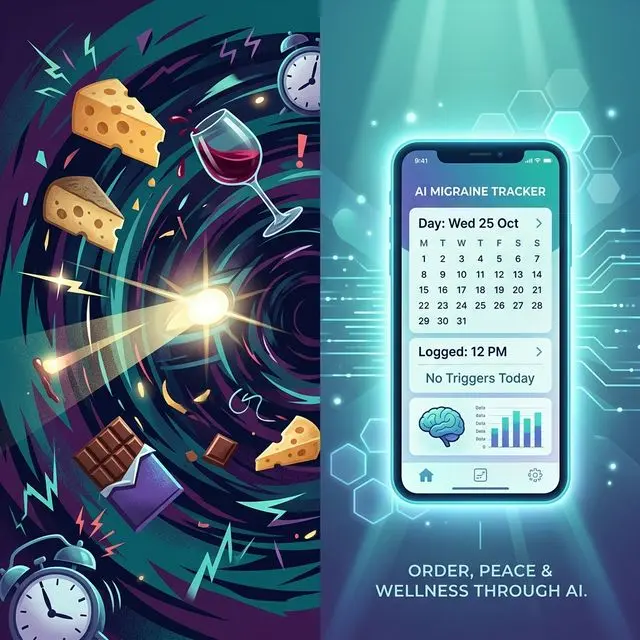
Key Takeaway: The most common migraine triggers are stress, irregular sleep, certain foods (aged cheese, red wine, chocolate), dehydration, hormonal changes, and barometric pressure drops. Identifying your personal triggers through consistent tracking and then making targeted lifestyle changes can significantly reduce attack frequency.
The top 10 migraine triggers include stress, poor sleep, dietary factors (like aged cheese and red wine), and barometric pressure changes. By identifying these triggers using a migraine relief app like Migraine Trail, you can reduce attack frequency by up to 50% through proactive avoidance and early intervention.
Why Do Migraines Have Triggers?
Migraines are rarely random. For the vast majority of people living with chronic migraines, attacks are the result of specific environmental, dietary, or physiological migraine triggers. By identifying your unique combination of triggers with a Migraine Trail, you can significantly reduce the frequency and severity of your attacks and find lasting migraine relief.
Here are the top 10 most common migraine triggers and how to build a lifestyle that actively avoids them. Using a free headache tracker is the first step.
1. Stress and Anxiety
Emotional stress is widely considered the most common migraine trigger. When you are stressed, your brain releases chemicals that provoke the "fight or flight" response, which can lead to vascular changes that trigger an attack. How to avoid it: Integrate daily mindfulness, deep breathing exercises, and ensure you're using a clinical tracker like Migraine Trail to identify if your attacks follow highly stressful periods at work.
2. Poor Sleep Patterns
Both lack of sleep and oversleeping can trigger migraines. The brain requires consistency to regulate neurotransmitters effectively. How to avoid it: Maintain a strict sleep schedule, going to bed and waking up at the exact same time every day, even on weekends. Read more about how sleep patterns affect migraines.
3. Dietary Triggers (Cheese, Chocolate, Alcohol)
Aged cheeses containing tyramine, chocolate, and alcohol (especially red wine) are notorious culprits. Our guide on foods that may cause migraines covers the full list and what to eat instead. How to avoid it: Use the custom tags in your Migraine Trail app to log everything you eat 24 hours prior to an attack. Elimination diets are the gold standard for isolating dietary triggers.
4. Dehydration
Even mild dehydration can trigger a severe pounding headache that rapidly evolves into a full-blown migraine. How to avoid it: Carry a water bottle everywhere. Aim for at least 80 ounces of water a day, and increase that amount if you are highly active or live in a hot climate.
5. Hormonal Fluctuations
For many women, the drop in estrogen right before their menstrual cycle initiates a severe attack. How to avoid it: Track your cycle alongside your migraines using a migraine log. If patterns emerge, speak to your neurologist about preventative triptans or continuous birth control. Read our full guide on hormones and migraines.
6. Weather and Barometric Pressure
A sudden drop in barometric pressure (often preceding a thunderstorm) can alter the pressure in your sinuses and brain, triggering a migraine without warning. How to avoid it: You cannot change the weather, but you can prepare. Use Migraine Trail's built-in weather prediction tool to get alerts before the pressure drops. Learn more in our guide on weather and migraines.
7. Sensory Overload (Bright Lights, Loud Sounds)
Fluorescent lights, screen glare, and loud environments can instantly overstimulate a hypersensitive nervous system. How to avoid it: Wear FL-41 tinted glasses indoors. Utilize blue-light filters on all electronic devices, and always keep noise-canceling headphones nearby.
8. Intense Physical Exertion
While regular, moderate exercise prevents migraines, sudden bursts of intense cardio or heavy lifting can trigger them. How to avoid it: Always warm up thoroughly before exercising. Stay hydrated during your workout and avoid pushing yourself into the "red zone" if you are feeling prodrome symptoms.
9. Caffeine Withdrawal (or Excess)
Caffeine is a double-edged sword. It can help abort a migraine, but drinking too much, or suddenly drinking less, can trigger one. How to avoid it: Limit your caffeine intake to no more than 200mg a day, and consume it at the exact same time every morning.
10. Skipping Meals
Fasting or delaying meals causes a drop in blood sugar, which is a powerful trigger for metabolic migraines. How to avoid it: Eat small, frequent, protein-heavy meals throughout the day. Never go more than four hours without eating.
The Power of Tracking
You cannot avoid what you do not understand. The most effective migraine management strategy is to log what sets off your attacks by logging your attacks meticulously. With the AI-powered voice logging in the Migraine Trail app, identifying your triggers takes only seconds a day.
Frequently Asked Questions
Q: What is the most common migraine trigger?
Stress is widely considered the single most common migraine trigger. Emotional stress causes the brain to release chemicals that initiate the "fight or flight" response, leading to vascular changes that can set off a migraine attack.
Q: Can food really trigger a migraine?
Yes. Specific chemical compounds found in certain foods, such as tyramine in aged cheeses, nitrates in cured meats, and histamine in red wine, can cause blood vessels in the brain to constrict and then rapidly dilate, triggering an attack in susceptible individuals.
Q: How do you figure out which triggers affect you personally?
The most reliable method is to keep a detailed migraine diary, logging potential triggers such as foods, sleep hours, stress levels, and weather conditions alongside each attack. Over time, patterns emerge that reveal your unique trigger profile. An elimination approach, where you remove suspected triggers one at a time, is the gold standard for confirmation.
Q: Can you prevent migraines by avoiding triggers alone?
Avoiding known triggers can significantly reduce attack frequency, but most neurologists recommend a combined approach that includes trigger avoidance, lifestyle consistency (sleep, hydration, meals), and, when needed, preventive medication. Migraines are rarely caused by a single trigger acting in isolation; it is usually a combination of factors that lowers your threshold.
Keep Reading
- Learn how to analyze migraine patterns using your app data.
- Compare the best migraine tracker apps of 2026.
- Follow our step-by-step guide to using Migraine Trail.