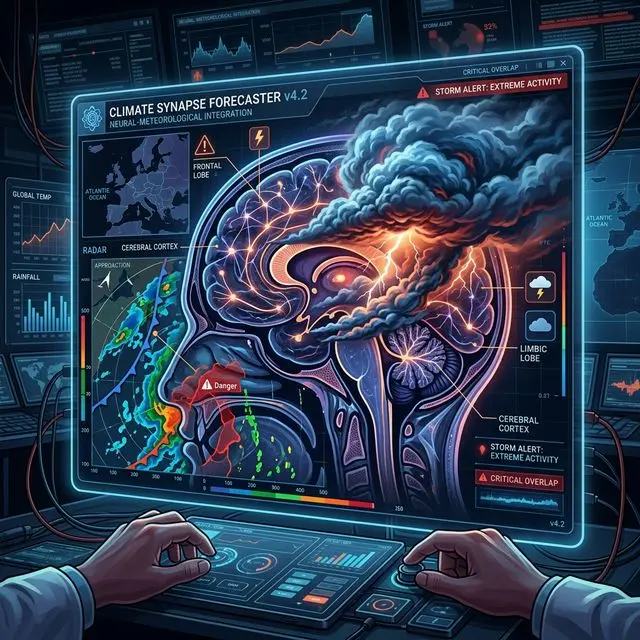
We've all been there: it's Thursday afternoon. You’ve worked a grueling fifty-hour week, and you finally have a magnificent, fully planned weekend ahead. You have tickets to a concert, a reservation at a fantastic restaurant, and a highly anticipated hike scheduled with friends. But by Friday evening, dark clouds begin to gather on the horizon. The temperature drops rapidly, the wind picks up, and long before the first drop of rain falls, that familiar, dreadful tightening begins at the base of your skull. By Saturday morning, your entire weekend is destroyed, confined to a dark, silent room with an ice pack and overwhelming frustration.
If your migraines are intrinsically linked to the shifting atmosphere, you already know that the weather is the ultimate, uncontrollable saboteur of joy. Our in-depth article on how weather affects migraines explains the science behind this connection. When barometric pressure drops suddenly, or humidity spikes, a hypersensitive neurological system registers the change as a severe physical threat, initiating a devastating cascade of head pain, nausea, and intense light sensitivity.
But what if you didn't have to be a helpless victim to the forecast? What if, instead of waiting for the pain to strike, a sophisticated weather migraine prediction tool could act as an early-warning radar system, allowing you to intercept the attack long before it ruins your weekend? In 2026, this technology isn't just a luxury; it's a vital necessity for reclaiming your life and your leisure time.
The Devastating Impact of Weather Triggers
Weather-induced migraines are uniquely frustrating because they are impossible to avoid. If your trigger is red wine, you can simply stop drinking red wine. If your trigger is extreme physical exertion, you can stick to gentle yoga. But you cannot simply opt out of the Earth's atmosphere.
When a storm front moves in and the barometric pressure plummets, it creates a subtle difference between the pressure outside your body and the pressure inside your delicate sinus cavities. For migraineurs, this minor physical disparity causes blood vessels to swell and the highly sensitive trigeminal nerve to misfire with staggering intensity. The resulting "weather headache" is often cited as one of the most stubborn and difficult-to-treat variations of a migraine attack.
A weekend ruined by weather isn’t just about missed concert tickets; it is about the profound emotional toll. It breeds a constant, low-level anxiety. You become terrified of making plans, constantly scrutinizing the skyline, paralyzed by the fear that an invisible pressure drop is plotting to destroy your hard-earned time off.
How a Prediction Tool Radically Shifts the Balance of Power
A weather migraine prediction tool fundamentally changes your relationship with the atmosphere. It moves you from a state of anxious reaction to a state of calm, calculated preparation.
Modern, top-tier migraine apps like the Migraine Trail app leverage powerful predictive AI that continuously monitors highly detailed, hyper-local meteorological APIs. They don’t just look at whether it will "rain" on Saturday. The algorithms are specifically hunting for rapid downward vectors in atmospheric pressure (hPa), severe deviations in humidity, and abrupt temperature swings that historically correlate with neurological distress.
Here is exactly how integrating a weather prediction tool can salvage your weekend plans:
1. The 48-Hour Early Warning System
Instead of being blindsided on Friday night, a quality prediction tool acts proactively. On Wednesday evening, you receive a gentle push notification: "Alert: A significant 12 hPa barometric pressure drop is forecasted for Friday at 6:00 PM in your area. Your migraine risk for the weekend is HIGH."
This 48-hour head start is invaluable. It’s the difference between arriving at an ambush completely unarmed and walking into a battle with your shield raised.
2. Strategic "Trigger Load" Reduction
Migraines rarely have a single trigger; they are the result of a cumulative "trigger load." Think of your neurological tolerance like a bucket. When it rains, water fills the bucket. If the bucket overflows, a migraine triggers.
If your app warns you that a severe weather event (a massive influx of water) is arriving on Friday, you can spend Thursday intentionally emptying your bucket. You aggressively hydrate. You ensure you sleep a full eight hours. (For postpartum mothers, whose baseline vulnerability is already elevated by hormonal shifts, this proactive buffer is especially critical.) You skip the glass of wine at dinner and completely avoid stressful, high-intensity workouts. By actively lowering your baseline vulnerability, you create physiological "buffer room." When the barometric pressure drops, it fills the bucket, but crucially, it doesn't overflow. The weather changes, but the migraine never materializes.
3. Preemptive Medical Intervention
If your tracking data conclusively proves that severe weather changes invariably trigger a crippling attack, you can present this specific, undeniable evidence to your neurologist. They may authorize a preemptive action plan. Instead of waiting until Saturday morning when you are already in agony, the early warning allows you to take a long-acting preventative NSAID or other physician-approved medication precisely sequenced a few hours before the pressure inevitably drops, effectively short-circuiting the inflammatory response before the pain begins.
Reclaiming Your Life, Rain or Shine
Living with chronic migraines requires a profound level of tactical planning. You can either let the unpredictable whims of an unstable atmosphere dictate the terms of your life, or you can arm yourself with the predictive power of a sophisticated weather tool.
By leveraging advanced barometric forecasting, receiving proactive alerts, and taking immediate, preemptive defensive measures, you can finally stop fearing the clouds gathering on the horizon. Don't let another storm steal your weekend. Smart migraine management means deploying the technology available in 2026 to anticipate the drop and find migraine relief before the pain starts. Learn more about the migraine tracker app and how it helps you keep a trigger log with precision. Step out into your hard-earned time off with confidence, knowing exactly what's coming and exactly how to beat it. For a full comparison of the tools that include weather-based alerts, see our roundup of the best apps to track migraine symptoms. You may also want to explore the science behind barometric pressure and migraines explained, learn about rapid temperature drops and vascular headaches, and prepare with our cold front migraine emergency kit.