The Migraine Diary App You'll Actually Use
Log migraines by voice. No typing. No squinting at screens. No forgetting.
Most migraine diary apps fail the one test that matters: being usable mid-attack. Migraine Trail is the AI migraine diary built for the dark room, speak a few words, and your full log entry is done in seconds.
Start Your Free Migraine DiaryFree on iOS · No credit card required
Why Most Migraine Diaries Fail Within Two Weeks
You start strong. Then an attack hits. And the last thing you want is a bright screen and a keyboard.
Forgetting to Track Migraines
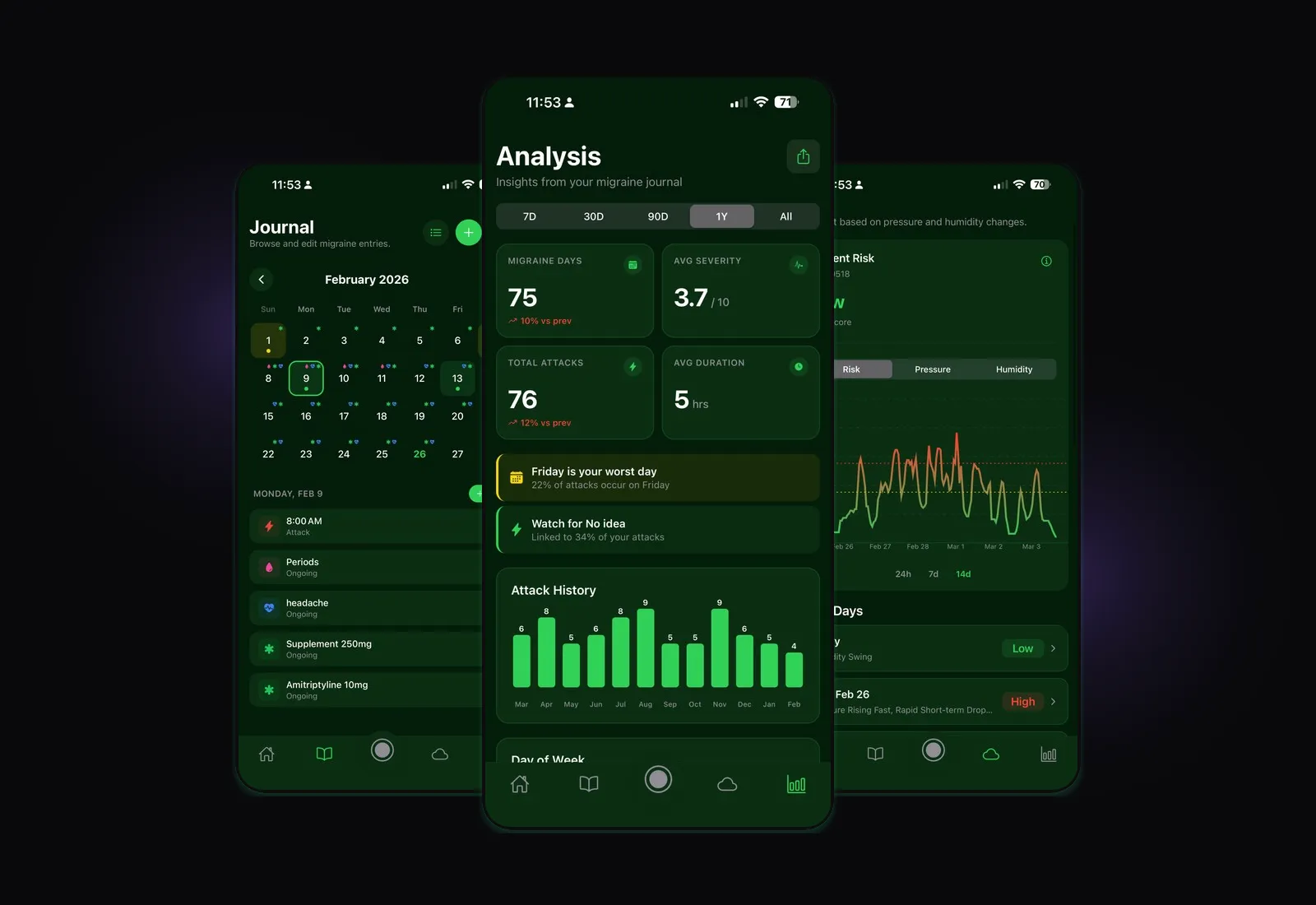
Paper journals get lost. Spreadsheet links get buried in tabs. Most migraine log apps require too many steps during a flare-up, so you skip it, and the data gap grows until the diary becomes useless.
The Diary Is Too Hard to Maintain
Staring at a bright screen and tapping fields while nauseous is miserable. That's why the average person abandons their migraine diary within two weeks, before any useful patterns have had time to emerge.
Incomplete Data = No Patterns
Skipping even 30% of entries makes trigger analysis unreliable. Your neurologist needs consistent, detailed logs over 2–3 months to make data-driven treatment decisions on your behalf.
The Easiest Migraine Logging Method Ever Built
Tracking migraines without typing is now possible. Here's how Migraine Trail makes it effortless.
Log by Voice. Eyes Closed, Lights Off
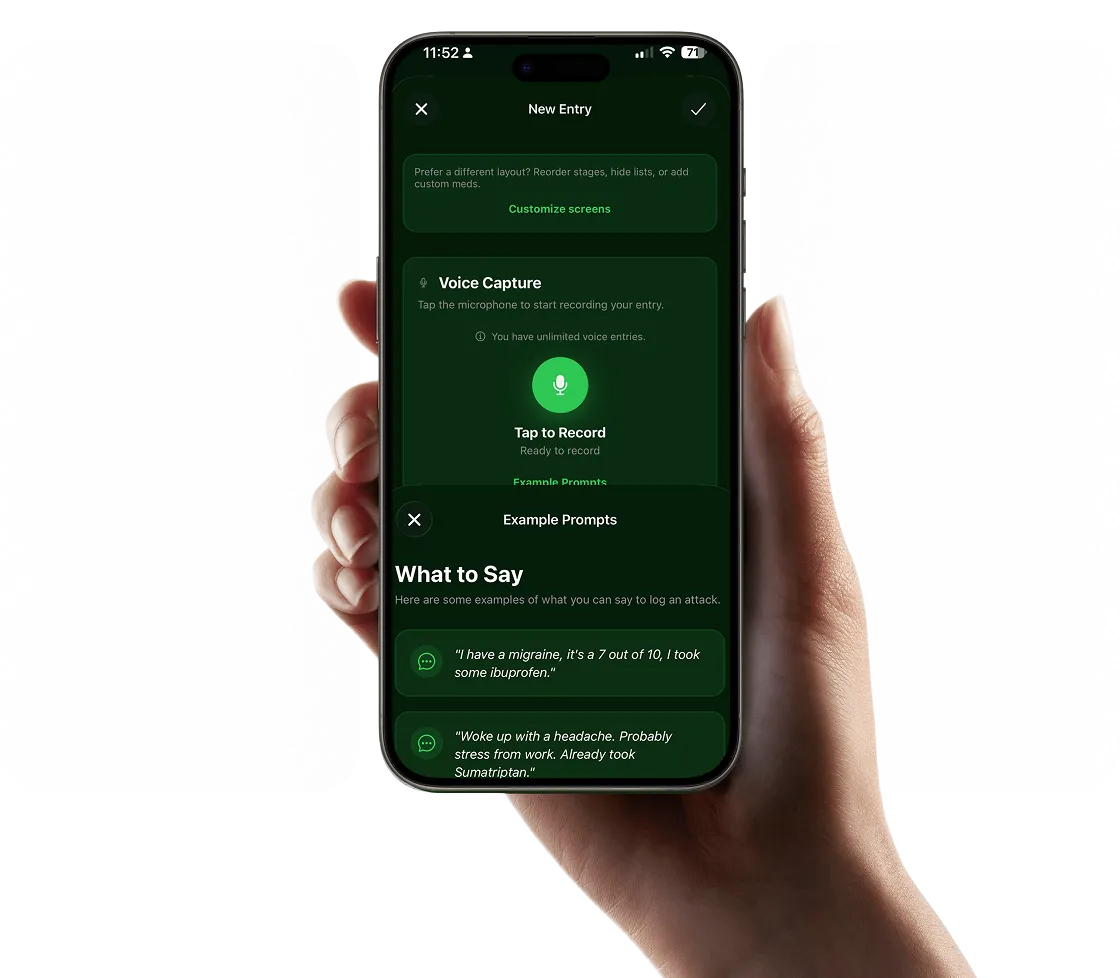
Migraine Trail's AI voice logging lets you describe your attack in plain English while lying in a dark room. Pain level, location, nausea, triggers, meds, just say it out loud. AI structures everything into a complete diary entry automatically.
- Hands-free migraine log, no screen interaction needed
- Parses natural language into structured clinical data
- Complete entry in under 30 seconds
Your Diary Analyzes Itself
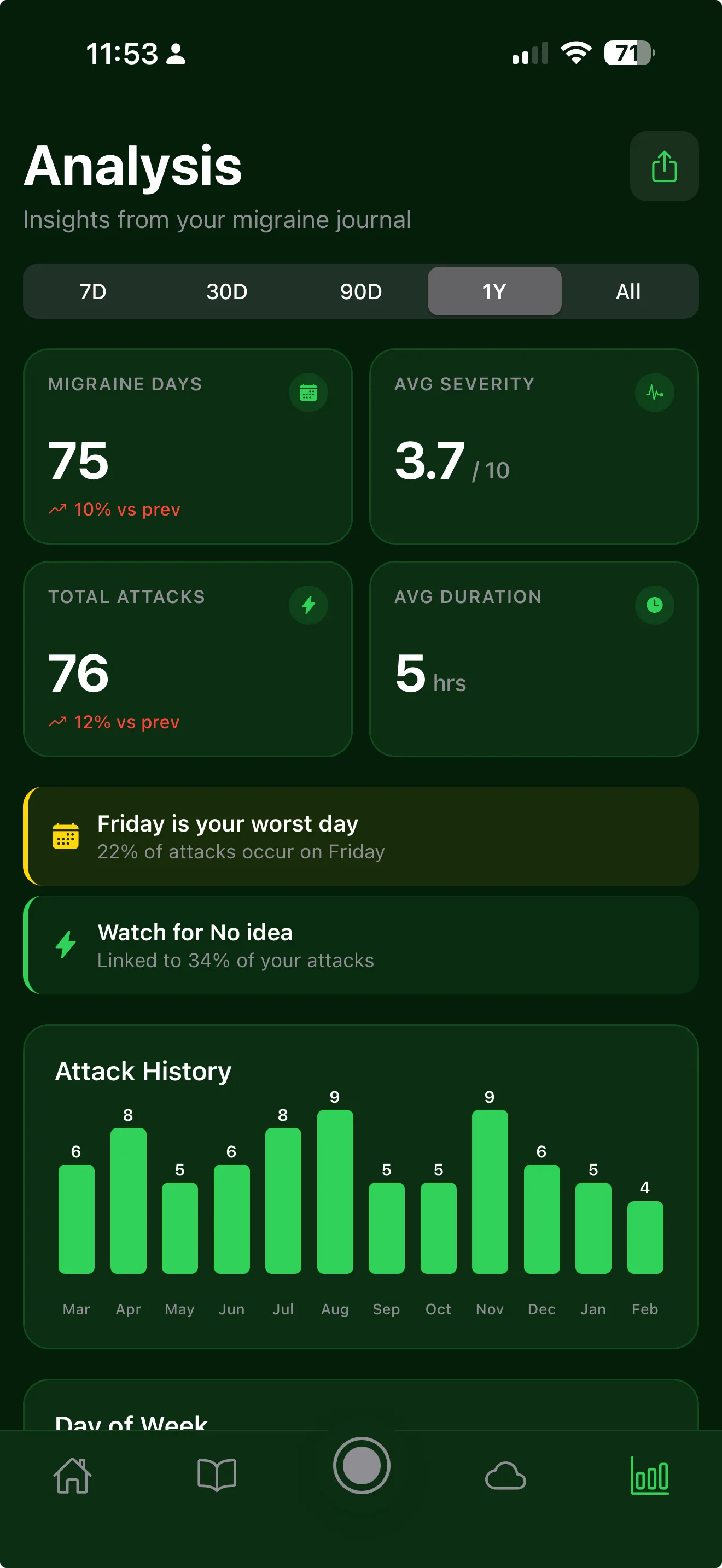
Every entry feeds into an AI pattern engine. Migraine Trail automatically cross-references your symptoms, triggers, medications, and weather data to surface the correlations you'd never spot manually, week after week.
- Automatic trigger correlation across all entries
- Attack frequency and severity trends over time
- Medication effectiveness scoring per attack

Turn Your Diary Into Doctor-Ready Reports
Your doctor reports are generated automatically from every diary entry. Export a full clinical PDF, with attack timelines, trigger charts, and medication logs, in one tap before any appointment.
- Clinical PDF with visual charts and heatmaps
- Covers attack frequency, severity, triggers, medications
- Share directly with your neurologist
What a Good Migraine Diary Actually Captures
A useful migraine log is more than a pain scale. Here's what makes the difference between guesswork and real answers.
Most people start a migraine diary with good intentions, but quickly realise they don't know what to log beyond "had a headache, pain was bad." The clinical value of a diary comes from the specificity and consistency of what you track over time, not just the existence of entries. A neurologist reviewing 90 days of vague pain ratings learns almost nothing. A neurologist reviewing 90 days of detailed attack logs, with timing, symptoms, potential triggers, and medication responses, can make genuinely informed treatment decisions.
The data points that matter most are often the ones people skip. Attack start and end time (not just the date) determines your total monthly headache hours, a key threshold for qualifying for preventative medication. Medication timing relative to attack onset determines whether your rescue drug is being used optimally or too late. Potential triggers logged before and during attacks, accumulated over weeks, reveal the patterns that no single entry ever could.
How to Keep a Migraine Diary You'll Actually Stick With
The biggest barrier is logging during an attack. Screen brightness alone can make it unbearable. Migraine Trail's voice-first design removes this entirely, you close your eyes, tap once, and speak for 20–30 seconds. The AI handles all the data structuring. Our guide to easier migraine journaling covers additional strategies for building a consistent habit, including how to set reminders that don't add stress.
Consistency matters more than completeness. Even a short voice note on bad days. "headache this morning, 6 out of 10, maybe weather-related", is far more valuable than perfect entries that only appear on good days. The goal is a dataset dense enough for pattern analysis, and that requires showing up every day, not writing the perfect entry.
From Diary to Diagnosis: How Your Logs Help Your Doctor
The average neurology appointment lasts 15 minutes. In that window, your doctor needs to understand your last 3 months of attacks, assess medication effectiveness, and make prescribing decisions, while you try to remember details through brain fog. A structured digital diary vs. paper diary comparison shows the difference clearly: digital logs eliminate recall bias, capture objective timestamps, and present data in a format clinicians can actually use. Your diary is the evidence base for your treatment. The more complete it is, the better your care.
What Your Migraine Diary Should Capture
A complete log entry gives your doctor the full clinical picture, not just "I had a bad headache."
Timing & Duration
Exact start and end time, not just the date. Total attack hours per month is the key metric neurologists use to classify migraine frequency and justify preventative medication.
Pain Intensity (1–10)
Objective pain scoring is the only way to measure whether a new treatment is reducing severity over time. Without numbers, your diary can't prove improvement.
Symptoms & Aura
Visual aura, nausea, photophobia, phonophobia, numbness, symptom patterns help confirm migraine subtype and directly influence which medications are available to you.
Possible Triggers
Sleep quality, stress levels, foods eaten, caffeine, weather changes, hormonal cycle. Logging potential triggers builds the dataset needed to identify your personal pattern over weeks.
Medication Timing & Effect
Which medication, at what point in the attack, and how effective was it? This data shapes whether your rescue medication dose or timing needs adjusting at your next appointment.
Postdrome & Recovery
The "migraine hangover", brain fog, fatigue, mood changes, can last 24–48 hours. Tracking postdrome severity gives a fuller picture of your total migraine burden.
Migraine Diary Questions Answered
Everything you need to know about keeping a migraine log that actually helps.
How do I keep a migraine diary without forgetting?
The biggest reason people stop keeping a migraine diary is friction, it's too hard to open an app, find fields, and type during an attack. Migraine Trail solves this with a single voice tap. Say what you feel, and AI structures it. You can also set a gentle daily reminder so you never forget to log a borderline day.
What is the best way to log migraines?
The best way to log migraines is one that you'll actually do during an attack. That means minimal screen time, no typing, and no complex menus. A voice-first migraine diary app like Migraine Trail is designed specifically for this, log a complete attack entry in under 30 seconds without lifting your head from the pillow.
What should I track in a migraine diary?
A complete migraine log entry should capture: attack start and end time, pain intensity (1–10), pain location, associated symptoms (nausea, aura, light and sound sensitivity), potential triggers (stress, weather, sleep, food), and any medications taken with their timing and effectiveness. Migraine Trail captures all of this from a short voice note.
Is there a migraine tracking app that works without typing?
Yes. Migraine Trail is built specifically for tracking migraines without typing. You speak your symptoms in your own words and the AI migraine tracker structures your entry automatically. This makes it the easiest migraine logging method for people who suffer from photophobia or severe pain during attacks.
Can a migraine diary help my doctor?
Absolutely. A consistent migraine log gives your neurologist objective data on attack frequency, severity trends, medication response, and potential triggers. Migraine Trail automatically generates clinical PDF reports from your diary, giving your doctor a complete picture in seconds rather than relying on your memory during a 15-minute appointment.
Start Your Free Migraine Diary Today
The best migraine diary app is one you'll actually use. Migraine Trail makes it as easy as speaking three sentences, even when you feel your worst.
Download Free on iOSRelated: Migraine Tracker App · Symptom Tracker