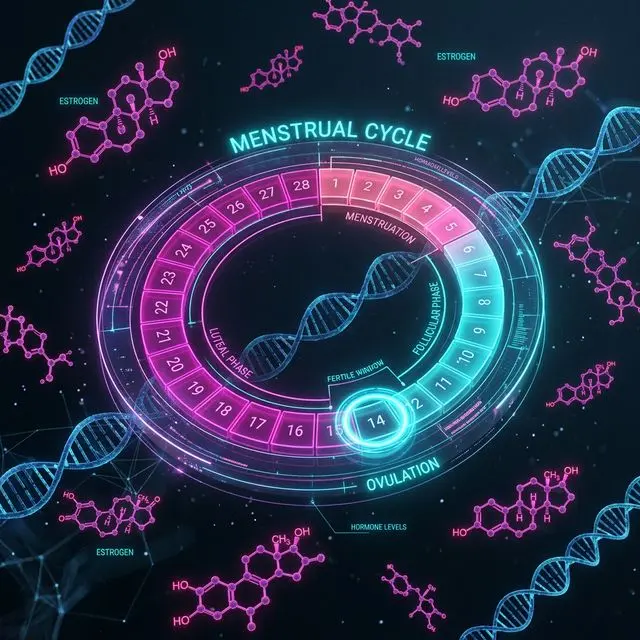
Key Takeaway: Hormonal migraines are primarily driven by sudden drops in estrogen, which is why they most commonly occur in the days just before and during menstruation. Women are three times more likely than men to experience chronic migraines due to these hormonal fluctuations. Predictable hormonal patterns make menstrual migraines uniquely treatable through timed preventive medications and cycle tracking.
Hormones affect migraines primarily through sudden drops in estrogen, which strip the brain of its neuro-protective barrier and make nerves hyper-excitable. By tracking your cycle alongside your attacks in a this migraine app like Migraine Trail, you can identify these patterns and implement mini-prophylaxis treatments. A migraine log app is essential for managing menstrual migraines.
Why Are Women More Likely to Get Migraines?
Migraines disproportionately affect women. In fact, women are three times more likely to suffer from chronic migraines than men.
The primary reason for this massive disparity? Hormones.
Specifically, fluctuations in estrogen play a dominating role in neuro-chemical stability. Understanding the hormonal timeline is critical for any woman fighting chronic attacks and seeking migraine relief. Using a migraine tracker app to monitor your migraine triggers alongside your cycle is the first step toward effective migraine management.
How Does the Estrogen Drop Trigger Migraines?
Estrogen is largely neuro-protective. When estrogen levels are high and stable, migraine thresholds are high, meaning it takes a lot of triggers to cause an attack.
However, in the days immediately preceding menstruation, estrogen levels plummet rapidly. This sudden "estrogen withdrawal" strips the brain of its protective barrier, making the trigeminal nerve hyper-excitable.
This results in the dreaded Menstrual Migraine. These attacks typically occur between two days before menstruation to three days after it begins. Menstrual migraines are notoriously severe, last longer than standard migraines, and are highly resistant to traditional abortive medications.
How Do Migraines Change Across Life Stages?
Because estrogen dictates the attacks, major life events that alter hormones heavily impact migraine frequency:
- Puberty: Many girls experience their very first migraine coinciding with their first menstrual cycle.
- Pregnancy: Migraines often improve dramatically during the 2nd and 3rd trimesters because estrogen levels stay consistently high and stable. However, they rapidly return postpartum when hormone levels crash.
- Perimenopause: The wildly fluctuating, unpredictable hormone levels during perimenopause often make this the most difficult period of life for female migraineurs.
- Menopause: Once menopause is fully achieved and estrogen stabilizes at a lower level, many women see a 60-70% reduction in lifetime migraine frequency.
What Are the Best Treatments for Menstrual Migraines?
Because menstrual migraines are predictable, they are uniquely treatable:
- Mini-Prophylaxis: Many neurologists prescribe a long-acting NSAID (like Naproxen) or a long-acting triptan (like Frovatriptan) to be taken twice a day starting two days before your period begins, continuing for five days. This bridges the gap during the estrogen drop.
- Continuous Birth Control: By taking combined oral contraceptives continuously (skipping the placebo week), you eliminate the estrogen drop entirely, effectively stopping menstrual migraines at the source.
- Magnesium Supplementation: Magnesium levels naturally drop during menstruation. Supplementing aggressively during your cycle can help stabilize neuro-receptors.
How Does Tracking Your Cycle Help Prevent Migraines?
To successfully implement a mini-prophylaxis protocol, you must know exactly when your estrogen is going to drop.
Use the Migraine Trail app to seamlessly track your menstrual cycle alongside your pain days using our headache tracking app features. Within just a few months, our AI pattern recognition will highlight exactly which days of your cycle leave you the most vulnerable. With voice logging, you can log your symptoms in seconds without even looking at your screen.
Frequently Asked Questions
Q: What is a menstrual migraine?
A menstrual migraine is a migraine attack that occurs in connection with the menstrual cycle, typically between two days before menstruation and three days after it begins. These attacks are triggered by the rapid drop in estrogen that happens just before a period. Menstrual migraines tend to be more severe, last longer, and respond less well to standard abortive medications compared to non-menstrual migraines.
Q: Do migraines get better after menopause?
For many women, migraines improve significantly after menopause is fully established, because estrogen levels stabilize at a consistently low level rather than fluctuating. Studies suggest that 60-70% of women experience fewer migraines after menopause. However, the perimenopause transition period (which can last several years) often brings the most difficult and unpredictable migraine patterns due to wildly fluctuating hormone levels.
Q: Can birth control make migraines worse?
It depends on the type. Combined oral contraceptives that include a placebo week can worsen migraines because the placebo week creates an artificial estrogen withdrawal. Taking combined contraceptives continuously (skipping the placebo week) may help by maintaining stable estrogen levels. Women who experience migraines with aura should consult their doctor, as certain hormonal contraceptives may carry additional risks.
Q: Do men get hormonal migraines?
While hormonal migraines are far more common in women, men can also experience hormone-related attacks. Fluctuations in testosterone have been linked to migraines in some men, though this is less well-studied. Men are more likely to have migraine triggers related to stress, sleep, and dietary factors rather than hormonal cycles.