What Sets Them Apart?
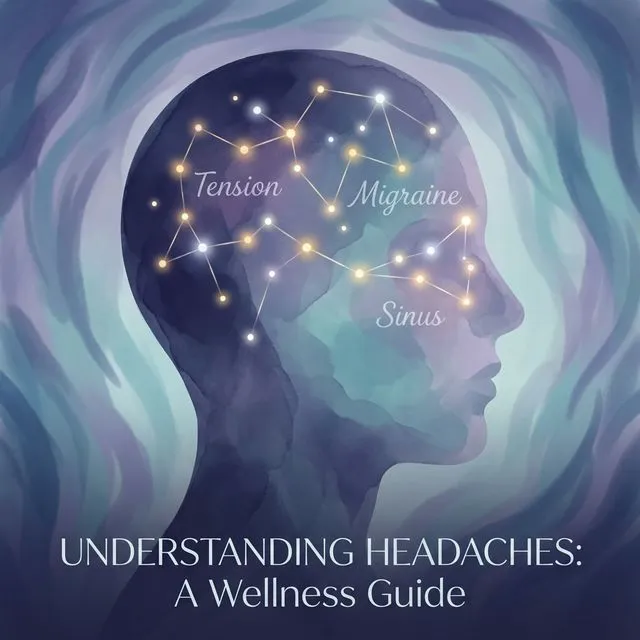
Headaches are one of the most common health complaints worldwide, but not all headaches are created equal. Among the different types of headaches, the two most prevalent - tension headaches and migraines - have distinct characteristics that require different approaches to treatment.
Tension Headaches
Tension-type headaches are the most common form of headache, affecting up to 80% of the population at some point. They typically present as:
- Mild to moderate pain intensity
- A pressing or tightening sensation (like a band around your head)
- Bilateral location (both sides of the head)
- Pain that does not worsen with routine physical activity
- No nausea or vomiting
- Sensitivity to light or sound (but not both)
Common Triggers
Tension headaches are often triggered by stress, poor posture, eye strain, dehydration, or skipping meals. They can last from 30 minutes to several days.
Migraines
Migraines are a neurological condition that goes far beyond a simple headache. Key features include:
- Moderate to severe pain intensity
- A pulsating or throbbing quality
- Usually unilateral (one side of the head)
- Pain that worsens with routine physical activity
- Nausea and/or vomiting
- Sensitivity to both light and sound
- Can last 4 to 72 hours
The Aura Phase
About 25-30% of migraine sufferers experience an aura before the headache phase. This can include visual disturbances (flashing lights, zigzag lines), tingling sensations, or difficulty speaking.
When to See a Doctor
Consult a healthcare provider if you experience:
- Headaches that are progressively getting worse
- A sudden, severe headache unlike any you have had before
- Headaches accompanied by fever, stiff neck, or confusion
- Headaches after a head injury
- Headaches that interfere with daily activities more than twice a week
Tracking Makes a Difference
Keeping a headache diary helps you and your doctor distinguish between tension headaches and migraines. Learning to categorize your pain accurately and tracking details like pain location, intensity, associated symptoms, and potential triggers builds a clearer picture over time. Tools like Migraine Trail make this process effortless with voice logging and automatic pattern detection.
The Migraine Trail, a free migraine tracking app that makes it easy to track migraine triggers, distinguish between headache types, and share detailed reports with your doctor.