When your head feels like it’s caught in a vice, or when a throbbing pain makes it impossible to think clearly, the last thing you want to do is play detective. Yet, so many of us spend hours lying in a dark room wondering: "Is this a tension headache? A sinus headache? Or am I finally experiencing a migraine?"
There’s a profound exhaustion that comes with unexplained pain. When you don't know exactly what type of headache you have, it’s hard to know how to fix it, and it's easy to feel like your body is broken.
This guide was written to softly cut through the confusion. Identifying the types of headaches you experience is the first step toward reclaiming your days. Together, let’s explore the subtle differences and help you find clarity and relief.
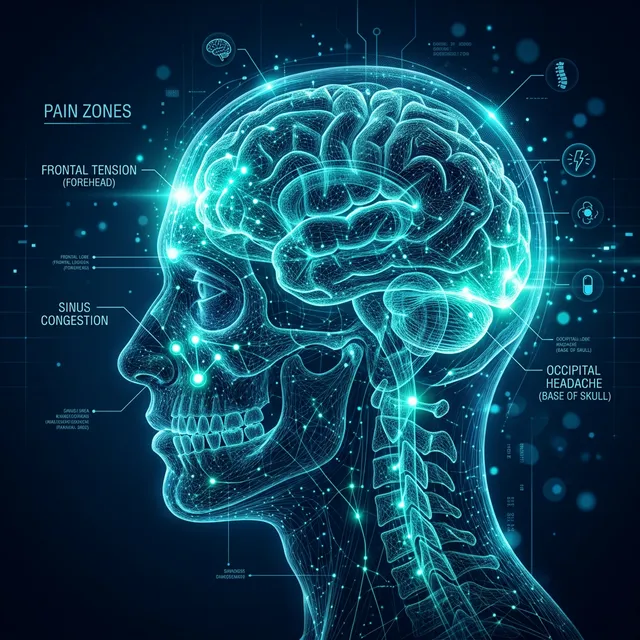
The Tender Map of Head Pain
Not all headaches are created equal. Where the pain lives, how it feels, and what symptoms accompany it are all vital clues.
Tension Headaches
A tension headache feels like a tight band wrapped around your head, squeezing incessantly. Learn more about how tension headaches differ from migraines.
- Location: Often felt across the forehead, temples, or the back of the neck and shoulders.
- Pain Type: Dull, aching, squeezing pain rather than throbbing.
- Empathy Note: These are often born from the weight of carrying too much stress. If your neck and shoulders are tied in knots, your body might be telling you it’s time to put your burdens down.
Migraine Attacks
A migraine is vastly more than a "bad headache." It is a systemic neurological storm.
- Location: Typically pulses on one side of the head, though it can shift or involve both sides.
- Pain Type: A severe, relentless throbbing or pounding.
- Accompanying Symptoms: Nausea, vomiting, and extreme sensitivity to bright lights, loud noises, and strong smells. You may feel overwhelmingly fatigued or emotional before the pain even begins (the prodrome phase). Some people also experience migraine with aura, a set of neurological symptoms that precede the headache.
- Empathy Note: Migraines are inherited neurological disorders. If you're experiencing this, it is not your fault, and it isn't "just in your head."
Sinus Headaches (The Great Imitator)
True sinus headaches are surprisingly rare, and many people who think they have them actually have migraines with nasal symptoms. Other severe headache types, such as cluster headaches, are also frequently misdiagnosed.
- Location: Deep and constant pain in your cheekbones, forehead, or the bridge of your nose.
- Pain Type: A feeling of overwhelming fullness or pressure that gets worse when you bend forward.
- Associated Symptoms: Often accompanied by a fever, thick nasal discharge, and a feeling of sickness. A true sinus headache is caused by an infection.
- Empathy Note: If your "sinus medicine" never quite works and the pain keeps returning, have a gentle conversation with your doctor about the possibility of migraines.
Moving From Confusion to Clarity
When you're caught in the cycle of pain, the most empowering thing you can do is simply record what you're feeling. Using Migraine Trail to talk through your symptoms, where the pain lives, the light sensitivity, the nausea, helps build a map of your experiences. This map is what your doctor needs to finally give you an accurate diagnosis.
It takes immense bravery to continuously search for answers when you're in pain. Keep tracking, keep asking questions, and be gentle with yourself when the pounding won't stop. You deserve to find relief.
Frequently Asked Questions (FAQ)
What type of headache do I have? If the pain is a dull ache like a tight band around your head, it’s likely a tension headache. If it’s severe, throbbing on one side, and comes with nausea or light sensitivity, it is likely a migraine. Only a doctor can give you a definitive diagnosis.
What is the difference between a tension vs migraine headache? Tension headaches involve a dull, constant squeezing pain without nausea or severe light-sensitivity. Migraines involve throbbing, pulsing pain, often on one side, and are accompanied by systemic symptoms like nausea, vomiting, or visual disturbances.
How do I safely treat a tension headache? Rest, applying a warm compress to the neck, gently stretching the shoulders, and taking over-the-counter pain relievers (like ibuprofen or acetaminophen) as directed by your doctor.
Are migraine symptoms worse in women? Hormonal fluctuations make migraines more prevalent in women, and they can be particularly severe, prolonged, and difficult to treat around the time of menstruation.
Start identifying your headache type with the the Migraine Trail app, available free that helps you log symptoms, track migraine triggers, and build the detailed pain map your doctor needs for an accurate diagnosis.