When discussing chronic pain with someone who doesn’t primarily suffer from it, the terminology is often flattened. The well-meaning colleague who suggests that you "just take an aspirin and drink some water" fundamentally misunderstands the spectrum of head pain. They are likely referring to a mild, episodic tension headache brought on by a long day staring at a computer screen. They are entirely oblivious to the fact that you might be currently enduring the neurological storm of a full-blown migraine, complete with violent nausea and blinding visual aura.
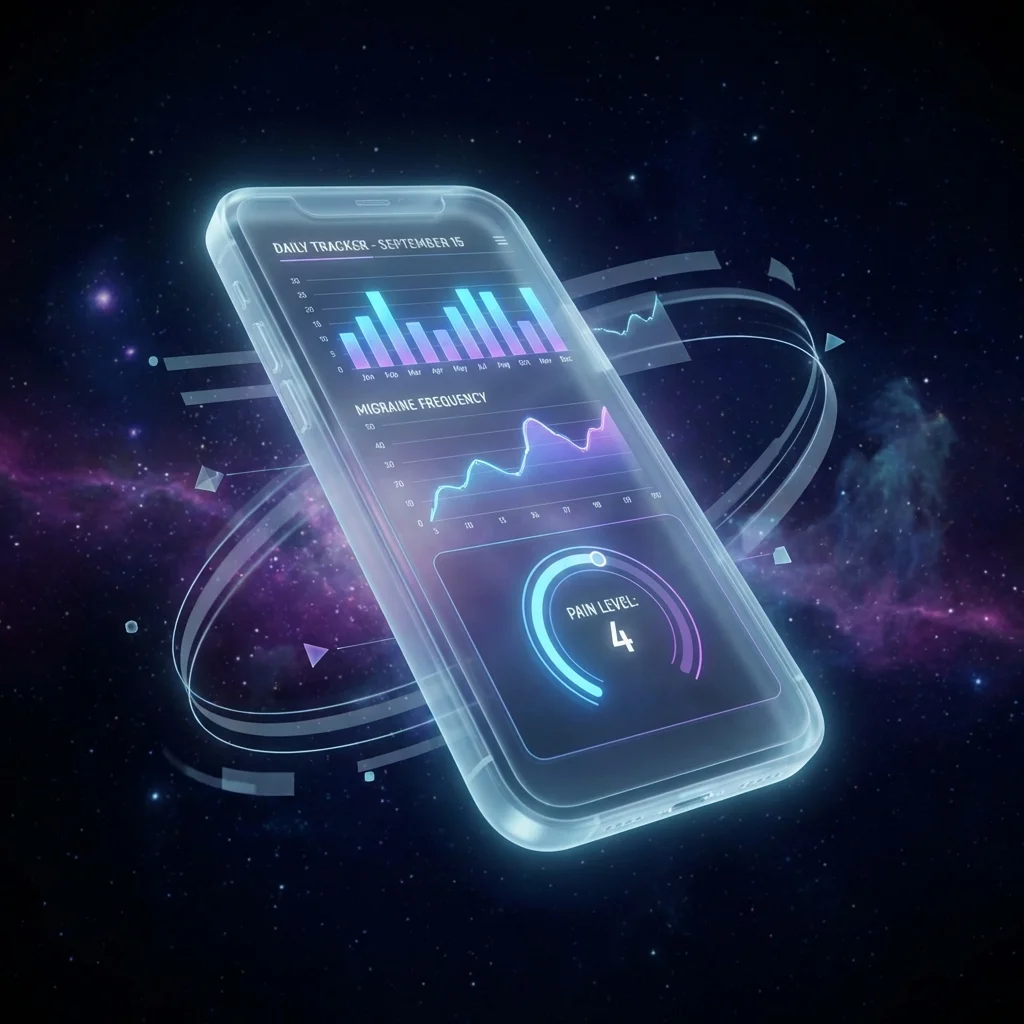
This public misconception is frustrating, but it becomes actively dangerous when it infiltrates your own medical tracking. If you are using a basic diary or app that forces you to log all cranial pain under a single, generic "Headache" category, you are sabotaging your own treatment.
The reality is that not all headaches are created equal. They possess distinct biological mechanisms, require entirely different pharmacological interventions, and follow entirely different patterns. A top-tier headache tracker app must allow you to accurately categorize these distinct pain profiles. Understanding how to properly classify your pain from tension headaches to cluster attacks is the vital first step toward reclaiming your neurological health.
The Danger of the "Generic Headache" Log
Imagine walking into an emergency room and simply saying, "My chest hurts." The doctors don't instantly know if you are having a mild panic attack, a severe bout of acid reflux, a broken rib, or a massive myocardial infarction (heart attack). The "chest pain" is just the primary symptom; the underlying cause is what dictates the life-saving treatment.
The exact same principle applies to your head. If your tracker only notes that you experienced a "Level 7 Headache" on a Tuesday, your neurologist learns nothing actionable.
Did that Level 7 pain throb relentlessly on one side of your head? Or did it feel like a terrifyingly tight band wrapping around your entire skull? Did it wake you from a deep sleep with a burning sensation behind your left eye, accompanied by intense restlessness?
These distinctions are clinically massive. A generic log blurs crucial data. It makes a classic migraine look identical to a tension ache, leading to potentially dangerous misdiagnoses, the prescribing of incorrect (and ineffective) medications, and the profound frustration of failed treatment plans.
Categorizing the Big Three: Migraine, Tension, and Cluster
To utilize your tracker app effectively, you must understand how to cleanly identify and log the primary categories of primary headache disorders.
1. Migraine: The Multi-System Storm
A migraine is rarely just pain; it is a complex neurological event. For a closer look at how migraine compares to other head pain, see our article on tension headache vs. migraine.
- The Pain Profile: Typically unilateral (affecting one side of the head, though it can shift), presenting as a moderate to severe throbbing or pulsating sensation. The pain is usually aggravated by routine physical activity like walking up stairs or bending over.
- How to Categorize It in Your Tracker: When logging a migraine, the focus must be on the associated symptoms. Your tracker should allow you to tag the presence of nausea, vomiting, photophobia (extreme light sensitivity), and phonophobia (sound sensitivity). Crucially, you must be able to log the presence of an "Aura" (visual zig-zags, blind spots, or tingling in the face/hands) if it precedes the pain.
2. Tension-Type Headache (TTH): The Vise Grip
Tension headaches are the most common type, frequently driven by severe stress, poor posture, or muscular strain in the neck and shoulders.
- The Pain Profile: Usually bilateral (affecting both sides). Patients overwhelmingly describe it as a dull, non-pulsating ache, or crucially, the sensation of a tight band being relentlessly tightened across the forehead or the base of the skull.
- How to Categorize It in Your Tracker: The defining feature of a tension headache is usually what it lacks. It is very rarely accompanied by severe nausea or vomiting. While you might be slightly irritated by bright light, true photophobia is absent. It is also usually not worsened by light physical activity. You should tag potential muscular triggers like "poor sleep posture" or "prolonged screen time."
3. Cluster Headache: The Suicide Headache
Cluster headaches are relatively rare but represent one of the most agonizing pain conditions known to modern medicine. Our dedicated guide on cluster headaches explained covers causes, cycles, and treatment options in depth.
- The Pain Profile: Always strictly unilateral, focusing an excruciating, burning, searing, or piercing pain in or directly behind one eye. The attacks are violent, reaching maximum intensity within minutes, and usually last between 15 minutes to three hours. Unlike a migraineur who wants to lie perfectly still in a dark room, a cluster patient is typically profoundly restless-pacing, rocking, or even banging their head against a wall in desperation.
- How to Categorize It in Your Tracker: The timing is critical. Cluster headaches often strike with clockwork precision, frequently waking the patient at the exact same time every night during a "cluster cycle." Your tracker must log the exact minute of onset. Furthermore, you must tag the autonomic symptoms that define a cluster attack: a drooping eyelid, severe tearing of the affected eye, nasal congestion solely on the painful side, and facial sweating.
The Power of Precision Data
When you finally sit down with a headache specialist, the data from a properly categorized tracker completely alters the clinical conversation.
If your categorized record clearly separates 15 days of mild, bilateral tension headaches from 4 distinct days of severe, unilateral migraines accompanied by aura, the doctor can formulate a highly targeted plan. They might recommend physical therapy or a muscle relaxant for the tension aches, and a specific CGRP inhibitor injection to prevent the migraines.
Conclusion
Your pain is not simple, and your tracker shouldn't be either. For a broader overview of primary and secondary head pain categories, explore our resource on understanding different types of headaches. Refuse to accept a generic "Headache" label. By learning the deeply specific clinical profiles of different headache types and vehemently categorizing them within a sophisticated tracker app, you provide your medical team with the pristine, targeted intelligence required to prescribe precision therapies, stopping the specific cycle of pain you are currently enduring.
Start categorizing your headaches with precision using the our free app that lets you log pain type, location, severity, and associated symptoms so you can track migraine triggers and give your doctor the data they need.