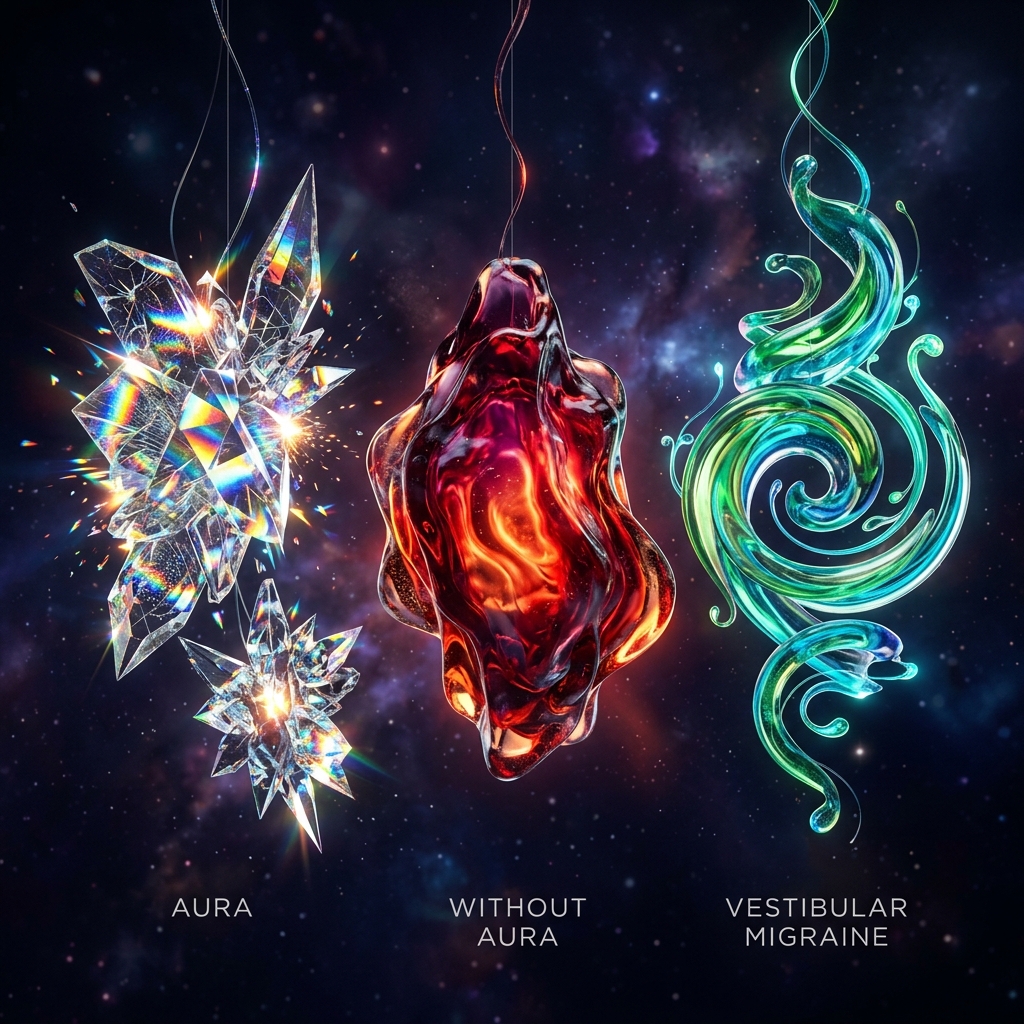
Key Takeaway: While the most common classification is "migraine with aura" versus "migraine without aura," there are many specialized types including vestibular, retinal, and hemiplegic migraines. Identifying your specific type is critical because treatment protocols vary significantly. What works for a classic migraine might not be appropriate for more rare or complex forms.
If you’ve been diagnosed with migraines, you might think your experience is exactly like every other sufferer's. However, migraine is a spectrum disorder with numerous subtypes, each with its own unique set of challenges and treatment requirements.
Using a migraine tracking app for your iPhone or Android to track your migraine triggers and symptoms can help you and your doctor pinpoint exactly which subtype you are dealing with. Our migraine symptom tracker helps you log and spot patterns across all your symptoms.
1. Migraine Without Aura (Common Migraine)
This is the most common type, accounting for about 70-80% of all migraine sufferers.
- Symptoms: Intense, throbbing pain on one side of the head, nausea, and sensitivity to light and sound.
- Defining Feature: No warning signs before the pain begins, though you may experience the Prodrome phase.
2. Migraine With Aura (Classic Migraine)
About 20-30% of people with migraines experience an aura: a specific neurological warning sign that occurs before the pain phase.
- Symptoms: Visual disturbances like zig-zag lines, blind spots, or flashes of light. It can also involve tingling in the hands or face.
- Defining Feature: These symptoms typically last between 20 and 60 minutes and resolve once the headache begins.
3. Vestibular Migraine
This type often doesn’t involve a headache at all, or the headache is secondary to the primary symptom: dizziness.
- Symptoms: Vertigo, imbalance, nausea, and dizziness. You may feel like the room is spinning.
- Defining Feature: These episodes can last for seconds or days and are often triggered by motion.
4. Retinal Migraine
A rare but serious form that involves visual disturbances in only one eye.
- Symptoms: Temporary partial or total loss of vision in one eye.
- Defining Feature: Unlike a standard aura which affects both eyes, a retinal migraine only affects one eye. It requires immediate medical consultation.
5. Hemiplegic Migraine
A rare and frightening type that can mimic the symptoms of a stroke.
- Symptoms: One-sided body weakness, numbness, and difficulty speaking.
- Defining Feature: The weakness can last from hours to days. Because it looks like a stroke, it always requires an emergency medical evaluation.
6. Abdominal Migraine
Most common in children, this type affects the stomach rather than the head.
- Symptoms: Moderate to severe stomach pain, nausea, and vomiting.
- Defining Feature: Children who have abdominal migraines often grow up to develop traditional migraine headaches.
7. Menstrual Migraine
Specifically linked to the drop in estrogen before a period.
- Symptoms: Severe, long-lasting migraines that occur in a regular monthly pattern.
- Defining Feature: These attacks are often more severe and harder to treat. Read our full breakdown on hormones and migraines.
Why Knowing Your Type Matters
Categorizing your migraine is the first step toward a targeted treatment plan. For example, people with hemiplegic or retinal migraines should generally avoid certain medications (like triptans) due to vascular risks.
Log Your Symptoms for a Correct Diagnosis
Are you experiencing visual flashes? Do you get dizzy before the pain starts? the headache tracking app allows you to capture these nuances in real-time. Providing your neurologist with a detailed doctor report generated from the app can drastically speed up the time to an effective treatment.
Frequently Asked Questions
Q: Which migraine app is best for doctors?
The best app for doctors is one that provides a comprehensive the app with detailed, easy-to-read PDF reports that summarize your frequency, triggers, and medication efficacy over time.
Q: Can you have more than one type of migraine?
Yes. It is possible to have migraines with aura on some occasions and without aura on others. You can also have menstrual migraines in addition to other trigger-based attacks.
Q: What is an ocular migraine?
"Ocular migraine" is a non-medical term often used to describe either a Migraine with Aura or a Retinal Migraine. Because the treatments and risks are different, it's important to get a specific medical diagnosis.
Q: Are migraine tracker apps accurate?
Yes, when used consistently, a migraine symptom tracker can be highly accurate in identifying patterns that both you and your doctor might otherwise miss.
Keep Reading
- Learn the difference between a migraine and a headache.
- Discover common migraine triggers you should avoid.
- Understand the early warning signs of a migraine attack.
- Check out the best free migraine apps of 2026. s-2026).