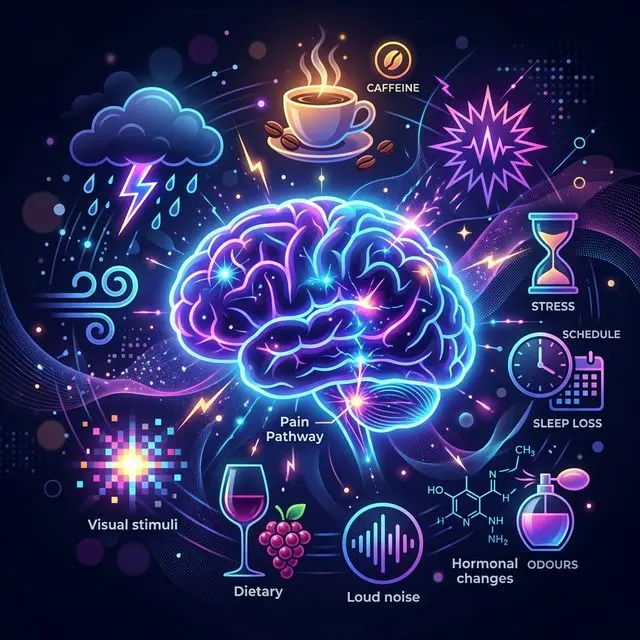
Key Takeaway: The most common migraine triggers supported by clinical data include barometric pressure drops, sleep irregularities, stress (including post-stress "let-down" episodes), dehydration, hormonal fluctuations, caffeine withdrawal, certain foods containing tyramine and nitrates, alcohol (especially red wine), bright or flickering lights, and strong odors. Identifying your personal triggers requires consistent tracking with a migraine app, as most attacks result from a combination of multiple triggers rather than a single cause.
Migraines are famously unpredictable, but they rarely happen without a cause. For the vast majority of the billion people suffering globally, attacks are prompted by specific physiological or environmental catalysts known as triggers. The key to prevention is figuring out exactly what your unique triggers are, a nearly impossible task without the help of a Migraine Trail.
Here are the top 10 migraine triggers, backed by clinical data, and how you can track them. For a deeper look at how triggers work neurologically, see our guide to understanding migraine triggers.
1. How Do Barometric Pressure Drops Trigger Migraines?
Weather is the undisputed king of migraine triggers. Over 50% of migraine sufferers report that changing weather patterns induce their attacks. When a low-pressure system rolls in (typically bringing rain or storms), the sudden drop in atmospheric pressure can physically expand your sinus cavities and blood vessels, sparking neuro-inflammation. It's vital to use a tracker that integrates with a live weather migraine prediction tool. Make sure to read our deep dive on why barometric pressure drops trigger pain.
2. Why Do Sleep Irregularities Cause Migraines?
The migraine brain thrives on absolute routine. Oversleeping on a Saturday morning is just as likely to trigger an attack as pulling an all-nighter on Tuesday. Maintaining a strict sleep hygiene schedule is critical.
3. What Is a "Let-Down" Stress Migraine?
Cortisol spikes during stressful periods, but paradoxically, many patients experience their worst migraines immediately after a stressful event resolves. This is known as the "let-down" migraine, occurring when cortisol plunges.
To document this, you must meticulously monitor your migraine triggers and correlate your emotional state over multi-day periods using a headache tracking app. When reviewing your logs, learning how to analyze your migraine patterns will reveal these delayed stress responses.
4. How Does Dehydration Lead to Migraines?
The brain is 73% water. Even mild dehydration shrinks brain tissue, pulling on the meninges (the connective tissue surrounding the brain), which causes intense pain.
5. How Do Hormonal Changes Trigger Menstrual Migraines?
For women, the sudden drop in estrogen just before menstruation is a massive, highly predictable trigger. Menstrual migraines are often more prolonged and resistant to standard acute medications.
6. Can Caffeine Both Help and Trigger Migraines?
Caffeine is a double-edged sword. A small amount can abort a migraine by constricting blood vessels, but regular heavy use leads to "rebound" withdrawal headaches.
7. Which Foods Are Proven Migraine Triggers?
Dietary triggers are heavily debated, but Tyramine (found in aged cheeses like blue cheese and parmesan) and Nitrates (found in cured meats like hot dogs and bacon) are scientifically documented vasodilators.
8. Why Is Red Wine a Common Migraine Trigger?
While the alcohol itself causes dehydration, red wine contains high levels of tannins and sulfites, making it the most potent alcoholic trigger for migraineurs.
9. How Do Bright or Flickering Lights Trigger Migraines?
Photophobia is both a symptom and a trigger. Exposure to intense sunlight glare, flickering fluorescent office lights, or prolonged exposure to blue light screens can aggravate the optic nerve.
Tip: This is why many users switch to an audio-based migraine tracker app that doesn't require looking at a screen during an attack. Discover exactly how to track migraines without looking at a screen to save your eyes during an episode.
10. Why Do Strong Smells Cause Migraines (Osmophobia)?
Perfumes, strong cleaning chemicals, cigarette smoke, and even heavy food smells can activate the trigeminal nerve.
How to Find Your Triggers
Reading this list is easy; identifying which ones specifically apply to you requires data. Human memory is flawed. You cannot rely on your memory to tell your doctor what caused an attack last month.
The most effective method for identifying your personal culprits is using a migraine journal app. By logging your attacks, diet, and sleep, and letting the app automatically handle complex atmospheric data, you can generate clear, actionable PDF reports that highlight your precise trigger thresholds. For those with chronic migraines, this data-driven approach to migraine management is the most reliable path to migraine relief. Stop guessing, and start tracking with data.
Frequently Asked Questions
Q: Do most migraines have a single trigger or multiple triggers?
Most migraine attacks are caused by a combination of triggers rather than a single factor. Research indicates that the migraine brain has a cumulative threshold, and an attack occurs when the combined load of multiple triggers (such as poor sleep plus dehydration plus a weather change) exceeds that threshold on a given day.
Q: Are migraine triggers the same for everyone?
No. While common triggers like stress, sleep disruption, and weather changes affect a large percentage of migraine sufferers, each person has a unique trigger profile. This is why systematic personal tracking over weeks or months is more useful than relying solely on general trigger lists.
Q: Can you develop new migraine triggers over time?
Yes. Trigger profiles can change with age, hormonal shifts, lifestyle changes, and even new medications. Ongoing tracking is important because a trigger that did not affect you five years ago may become relevant as your physiology changes.
Q: How do you tell the difference between a trigger and a prodrome symptom?
This is a common challenge in migraine tracking. Some things perceived as triggers, such as food cravings or mood changes, may actually be prodrome symptoms (early warning signs of an attack already in progress). Consistent logging of the timing and sequence of symptoms and suspected triggers helps distinguish between the two over time.
Start with our daily migraine tracking guide for a step-by-step approach, and compare the best migraine tracker apps of 2026 to find the tool that fits your lifestyle.