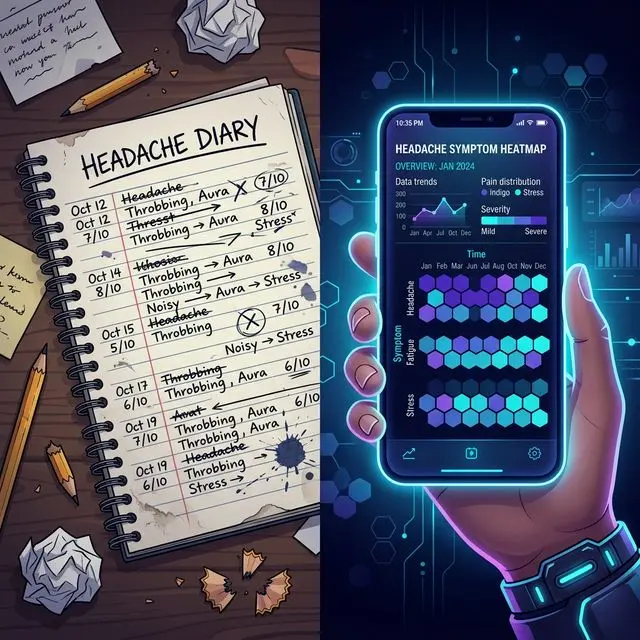
Key Takeaway: A mobile migraine tracker app offers significant advantages over paper journals by automatically correlating attacks with environmental data like barometric pressure, monitoring medication usage to prevent rebound headaches, and generating structured reports for neurologist appointments. Effective tracking depends on choosing an app with fast logging, voice input, and automated data analysis.
For decades, the standard advice given by headache specialists was to buy a notebook and physically write down every time your head hurt. While paper journals were better than nothing, they are practically prehistoric compared to the insights generated by a modern migraine tracker app. If you are new to tracking, start with our guide to the easy migraine tracker app.
If you are dealing with chronic migraines and want to upgrade your path to migraine relief, learning how to leverage a digital migraine diary app is your first, most crucial step. If you're comparing your options in the App Store, you'll want to read about the must-have tracker app features before making a decision. Here is how to track effectively and get actionable results.
1. Why Is a Digital Tracker Better Than a Paper Migraine Journal?
A paper journal is passive; it just sits there. A migraine diary is active. When you log an attack digitally, the app can automatically cross-reference the exact timestamp of your headache against external APIs.
For instance, the Migraine Trail app automatically pulls historical barometric pressure readings. While you are resting, the app is mathematically calculating if a steep pressure drop occurred right before your attack, effortlessly helping you spot your trigger patterns without you having to be an amateur meteorologist. For an explanation of why this works, see our guide on barometric pressure and migraines.
2. How Can a Migraine App Help Prevent Rebound Headaches?
One of the most dangerous, hidden traps in migraine management is Medication Overuse Headache (MOH). If you take acute rescue medications (like Triptans or heavy NSAIDs) too frequently (typically more than 9-10 days a month), your brain will paradoxically start generating more headaches.
A digital app actively monitors your medication intake. It will visually warn you if you are approaching the threshold for rebound headaches, something a paper calendar simply cannot do. It also allows you to calculate the precise efficacy percentage of your prescriptions. Once you have logged this data, you can analyze your migraine patterns to see which pill works best for which type of attack.
3. Leverage High-Speed Logging
During an attack, you are cognitively impaired and in physical agony. A high-quality migraine journal app reduces the friction of logging to near-zero.
Look for features like voice logging that allow you to dictate your symptoms in 10 seconds. The faster and easier it is to log, the more accurate your clinical data will be. Not having to type means you can easily track migraines without looking at a screen.
4. What Kind of Reports Can a Migraine Tracker Generate for Your Doctor?
The ultimate goal of tracking is to communicate your reality to a neurologist. A doctor has 15 minutes to review your case. If you hand them a stuffed, messy notebook, they cannot physically parse the data to see patterns.
A premium digital tracker exports beautiful, structured PDF reports. It converts your 90 days of pain into calendar heatmaps, severity bar charts, and clear pie charts detailing your exact trigger distribution. Because doctors speak the language of structured data, walking into an appointment with a printed clinical report instantly changes the dynamic of the consultation. For a deeper dive into this dynamic, read about how to present migraine data to your neurologist.
Frequently Asked Questions
Q: What is Medication Overuse Headache (MOH) and how does an app help prevent it?
Medication Overuse Headache occurs when acute rescue medications like triptans or NSAIDs are taken too frequently, typically more than 9-10 days per month, causing the brain to generate additional headaches. A tracking app monitors your medication intake automatically and warns you when you approach the overuse threshold.
Q: How much data do I need to log before a migraine app reveals useful patterns?
Most neurologists recommend at least 30 to 90 days of consistent tracking before meaningful patterns emerge. Digital apps accelerate pattern detection by automatically correlating your attacks with environmental variables like weather, sleep, and medication timing.
Q: Can I share my migraine tracking data with my doctor?
Yes. Many migraine tracker apps can export your data as structured PDF reports that include calendar heatmaps, severity charts, and trigger distribution breakdowns. These reports are designed to be reviewed quickly during a clinical appointment.
Q: Is voice logging available in mobile migraine tracker apps?
Several modern migraine tracker apps include voice logging, which allows you to dictate symptoms in about 10 seconds without navigating menus or looking at the screen. This is especially useful during an active attack when cognitive function and light tolerance are impaired.
Conclusion
Migrating to a digital solution is the single highest-leverage action a chronic sufferer can take. Stop relying on flawed memory and messy notebooks. Download a dedicated mobile app (like following our Migraine Trail onboarding guide), build the 10-second daily habit, and start taking charge of your neurological health today.