When a full-blown migraine attack finally crests, bringing with it throbbing pain, intense nausea, and crippling light sensitivity, it often feels as though it struck completely out of the blue. One minute you were fine, working at your desk, and the next, you are incapacitated in a dark room.
This perception-that migraines are random, chaotic, and utterly unpredictable-is one of the most disheartening aspects of living with the disease. It breeds a constant, low-level anxiety. You never know when the next strike will happen. However, neurologists assert that a migraine is rarely a sudden event. It is the culmination of a highly complex, often days-long physiological process. The attack itself is just the final, agonizing crescendo.
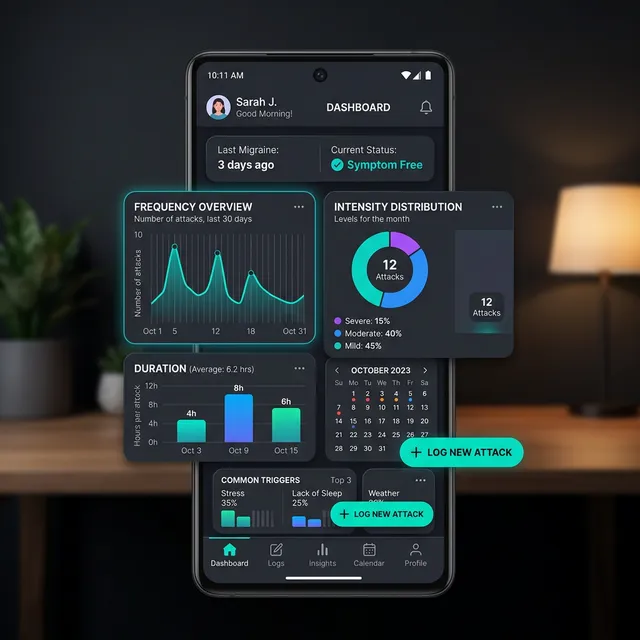
The phases leading up to the pain-the prodrome and the aura-are littered with subtle clues. These clues form hidden patterns. If you remain unaware of them, you remain a victim of "random" attacks. But if you learn to identify these hidden patterns using a sophisticated symptom tracker, you can transform your entire approach from reactive suffering to proactive defense.
The Invisible Architecture of an Attack
To uncover hidden patterns, you must first understand the complete anatomy of a migraine. The clinical classification divides a migraine into four distinct phases, although not every patient experiences every phase:
- Prodrome (The Warning Phase): This phase can begin anywhere from a few hours to a full 48 hours before the actual head pain starts.
- Aura: Experienced by about a third of sufferers, this usually immediate precursor involves neurological symptoms, most commonly visual disturbances like zig-zag lines, blind spots, or flashing lights.
- Headache (The Attack Phase): The severe, throbbing pain, often accompanied by nausea, vomiting, photophobia (light sensitivity), and phonophobia (sound sensitivity).
- Postdrome (The Hangover): The exhaustion, brain fog, and muscle weakness that linger for up to 24 hours after the pain resolves.
The real power of a symptom tracker lies not in logging the headache, but in meticulously charting the prodrome.
Spotting the Subtleties of the Prodrome
The prodrome is notoriously difficult to identify without a robust tracking system because its symptoms are incredibly subtle and mimic everyday life. Think about it: how often do you feel a little tired or crave a piece of chocolate? For a non-migraineur, that's just a normal Tuesday afternoon. For a migraineur, those specific feelings might be the critical early warning signs of an impending attack.
A high-quality symptom tracker forces you to look beyond the obvious pain scale. It encourages you to actively monitor a wide spectrum of physical and cognitive shifts. Here are the most common, deeply hidden patterns that a good tracker will help you uncover:
1. The Mood Swings (Dysphoria or Euphoria)
Sudden, inexplicable shifts in mood are classic prodrome symptoms. If you find yourself snapping at your partner over a minor issue, feeling unreasonably depressed, or conversely, feeling a bizarre burst of hyperactive energy, it isn't just an emotional fluctuation-it is a neurological misfiring. By logging "extreme irritability" consistently 24 hours before a level-8 pain day, your tracker reveals a definitively predictable pattern.
2. The Cognitive Fog and Aphasia
Do you suddenly struggle to find the right word during a conversation? Do you drop your keys or feel unusually clumsy? Aphasia (difficulty with language) and generalized brain fog are common precursors caused by early brain changes. Logging "couldn't finish a sentence" in your tracker can become your most reliable early warning signal.
3. The Unexplained Cravings and Yawning
When you suddenly crave a massive plate of salty french fries or a chocolate bar, it is often not a dietary choice; it is your brain attempting to manage impending metabolic stress. Similarly, excessive, uncontrollable yawning (unrelated to actual tiredness) is a frequently reported but rarely noticed prodrome symptom. A good tracker will specifically ask you about cravings and yawning, pulling these hidden details into daylight.
The "Stacking" Effect: Why Multi-Tracking Matters
Migraine triggers are almost never singular. For a full inventory of the most frequently reported ones, see our list of 10 common migraine triggers and our deeper guide to understanding migraine triggers. You don't get a migraine just because you ate an aged cheese. You usually get a migraine because you ate aged cheese while stressed, after sleeping poorly, during a barometric pressure drop. This is known as "trigger stacking."
A manual notebook cannot easily calculate a four-variable equation. A modern symptom tracker, however, excels at this.
Why Advanced Trackers Succeed Where Journals Fail
Top-tier symptom trackers in 2026 go far beyond simple symptom lists. They passively collect your biometric data (like heart rate variability and sleep staging from your smartwatch) and cross-reference them with environmental data (live weather APIs).
When you consistently log "excessive yawning" alongside passive data showing "poor REM sleep" and a "falling barometer," the app's AI algorithms identify the comprehensive, hidden pattern. It connects the dots you couldn't possibly see.
Turning Patterns into Prevention
Once your symptom tracker illuminates these hidden patterns, the game fundamentally changes. The anxiety of "random attacks" begins to evaporate.
If you know, comprehensively, that neck stiffness, a craving for salt, and a feeling of irritability guarantee an attack within 12 hours, you stop ignoring those signs. You act. You begin aggressively hydrating. You cancel taxing social plans. You execute the specific abortive or preventative medication strategy outlined by your neurologist-not when you are already screaming in pain, but when you first feel the urge to yawn excessively.
Identifying these subtle, hidden patterns with a dedicated symptom tracker is the ultimate form of self-empowerment. For practical advice on turning your raw data into actionable prevention strategies, read our guides on smart data habits and how to spot patterns and stop migraines. It shifts the power dynamic of the disease. You are no longer waiting for the ambush; you are reading the terrain, anticipating the attack, and deploying your defenses before the very first blow lands.
Uncover your hidden migraine patterns with the Migraine Trail, a free tracking tool that helps you log prodrome symptoms, track migraine triggers, and identify the early warning signs unique to your attacks.